Would Einstein Get Funded Today?
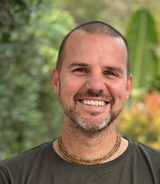

In a conversation with Curt Jaimungal on his Theories of Everything podcast, David Deutsch made a claim that really piqued my interest. Einstein, he argued, would not survive the modern academic funding system. Not because his ideas were bad — obviously — but because the system is structurally incapable of recognizing the kind of work that produced relativity in the first place.
Deutsch's diagnosis is very specific. Modern grant systems reward incremental work with predictable outcomes on predictable timescales. They favor researchers who can describe, in advance, exactly what they will find and why it matters. Einstein in 1905 could not have written that proposal. Nobody doing genuinely foundational work can.
The problem, as Deutsch puts it, is that we fund projects instead of people.
The Checkbox Problem
Think about what a grant application actually asks for. A well-defined problem. A clear methodology. Preliminary results. Expected outcomes. A timeline. These are reasonable requirements if you're trying to optimize a known technique or extend an existing framework. They are the wrong requirements entirely if you're trying to question the framework itself.
Foundational research — the kind that asks whether spacetime is real, whether quantum systems are what we think they are, whether our most basic physical languages have conditions of validity — doesn't fit neatly into any of those boxes. It can't be reviewed by referees who specialize in incremental extensions of established programs. It often looks, from inside the system, like philosophy rather than physics. Sometimes that's used as a dismissal.
Why Silence Is Rational
Deutsch also made an observation that's harder to shake: academics who privately doubt the dominant frameworks often stay quiet. This isn't cowardice, it's rational and self-preservational. The incentive structure punishes foundational skepticism and rewards technical productivity within accepted paradigms. Tenure committees don't reward questions; they reward papers. And papers are easier to write when you're not questioning the foundations.
The result is a kind of systemic conservatism that has very little to do with the conservatism of individual scientists, many of whom are privately quite radical! The institution selects for caution even when the people inside it aren't particularly cautious.
What Gets Lost
What gets lost isn't the flashy heterodox ideas — those tend to find audiences anyway. What gets lost is the patient, rigorous, technically serious work that sits at the intersection of physics and philosophy and doesn't fit the departmental structure of either. Work that asks not just what the equations say, but when those equations are the right language to use at all.
We think about this directly in our own research here at SPI. Questions like when geometric language is representationally valid, or whether decoherence is sufficient to establish that a branch supports a genuine quantum system, require taking both the mathematics and the philosophy at face value. They don't belong to physics departments or philosophy departments. They belong to the conversation between them — a conversation the current academic structure makes genuinely difficult to have.
Funding People, Not Projects
Deutsch's proposed solution is simple in principle and radical in practice: fund people, not projects. Identify researchers with track records of genuine insight and give them the space to work without demanding that they pre-specify their conclusions. This is how Bell Labs worked. It's how some of the most productive independent research institutions have worked throughout history.
It's also, not coincidentally, the model closest to what we're trying to build at our institute.
The irony Deutsch names is real: the system that would have rejected Einstein's grant application is the same system that now hangs his portrait on the wall and invokes his name as the gold standard of scientific ambition. We'd like to think the lesson is obvious. Apparently it still needs repeating.
The conversation between David Deutsch and Curt Jaimungal is available on the Theories of Everything podcast.